Tourexpi

WTTC identifies eight priorities to strengthen European tourism

Europe remains the world’s largest international tourism destination, but maintaining its leadership will require coordinated action on investment, connectivity, sustainability and workforce development. A new report from the World Travel & Tourism Council (WTTC), presented at its 26th Global Summit in Valletta, Malta, identifies eight strategic priorities designed to strengthen the region’s competitiveness over the coming decade. The recommendations arrive as European governments develop new national tourism strategies and the European Union prepares its first dedicated tourism strategy.
According to WTTC, travel and tourism contributed almost US$3 trillion to Europe’s economy in 2025, representing 9.4% of regional GDP. The sector supported 40.7 million jobs, equivalent to approximately one in ten positions across the continent. Its economic contribution is expected to increase by 3.1% in 2026, considerably faster than the 1.1% growth forecast for the wider European economy.
The report, Travel & Tourism in Europe: A Deep Dive Into Growth, Outlook and Policy, examines economic performance, visitor spending, investment patterns and international source markets. It also considers the implications of the EU’s forthcoming tourism strategy and negotiations over its 2028–2034 Multiannual Financial Framework. WTTC argues that decisions taken during this period will determine how effectively Europe benefits from continued growth in global travel.
Visa reform and new source markets
Improving international accessibility is among the organisation’s central recommendations. WTTC calls for faster implementation of digital Schengen visas, wider availability of multiple-entry visas and the development of an EU-wide trusted traveller programme.
The number of multiple-entry Schengen visas issued in 2025 stood at 5.3 million, approximately 40% below the 2019 level. Their share of all visas declined from 59% to 51.7%, indicating that international visitors face greater restrictions on repeat travel than before the pandemic.
WTTC also highlights Europe’s dependence on regional tourism. In 2025, travellers from European countries accounted for 74.3% of international arrivals. Although Europe recorded an overall international travel trade surplus of US$33.9 billion, excluding travel within the region reveals a deficit of approximately US$45 billion.
Long-haul markets therefore represent an important growth opportunity. Arrivals from Asia-Pacific remained 4.8% below pre-pandemic levels in 2025, with Chinese visitor numbers still 43.2% lower than in 2019. Arrivals from Japan and South Korea were approximately 30% below their previous levels.
The organisation recommends stronger cooperation between governments and the private sector in international marketing, supported by stable promotional budgets and easier visa access.
“Europe already welcomes almost half of the world's international travellers. As global travel keeps growing, Europe is well placed to extend that leadership, and the choices governments make now will decide how much of that growth comes here,” said Gloria Guevara, WTTC President and CEO.
Investment and sustainability under pressure
Investment in Europe’s travel and tourism sector reached US$259 billion in 2025, an increase of 7.1% compared with the previous year. However, the figure remained 3.6% below its 2019 level and lagged behind investment in Asia-Pacific, at US$395 billion, and North America, at US$273 billion.
WTTC wants tourism recognised as a strategic economic sector within the EU’s next long-term budget. It also advocates improved access to financing for small and medium-sized businesses, greater regulatory stability and more direct access to European investment instruments.
Environmental challenges form another major component of the recommendations. Travel and tourism accounted for 6.3% of Europe’s greenhouse gas emissions in 2024, although emissions intensity declined by 14.8% between 2019 and 2024.
Mediterranean destinations face particular challenges because of their exposure to extreme heat and water shortages. These destinations account for 52.2% of Europe’s international visitor spending, making climate adaptation especially important for the region’s tourism economy.
WTTC recommends greater investment in water management, waste reduction, nature conservation and sustainable aviation and maritime fuels.
The organisation also calls for a shift in destination management away from purely volume-based targets. International arrivals in Europe are forecast to increase from 757.3 million in 2025 to 1.14 billion by 2036.
Managing this growth will require closer integration of tourism planning with housing, transport and public services. Digital tools could help distribute visitors more evenly across destinations and seasons, while tourism levies should be transparent and directed towards destination management.
Workforce shortages threaten future growth
Labour availability represents another significant challenge. Young people account for 13.1% of direct travel and tourism employment in Europe, compared with 8.3% across the wider economy, underlining the sector’s importance as an entry point into the labour market.
Nevertheless, demand for employees is expected to exceed supply in several major destinations. WTTC forecasts workforce shortages equivalent to 26% of demand in Germany and 27% in Greece by 2035.
The organisation recommends expanding apprenticeship programmes, improving recognition of tourism qualifications and supporting greater international workforce mobility.
Artificial intelligence forms the seventh strategic priority. WTTC sees opportunities for AI to improve operational efficiency, customer services and destination management, but warns that smaller tourism businesses could struggle to adopt new technologies without financial and technical support.
The eighth priority focuses on connectivity. Better integration of air, rail, maritime and road transport would improve access to destinations, particularly islands, rural regions and peripheral areas. WTTC advocates interoperable travel information, integrated ticketing and easier multimodal journeys across national borders.
These improvements should be accompanied by practical decarbonisation measures without undermining essential air connections to destinations with limited transport alternatives.
Europe’s tourism economy could exceed US$3.8 trillion
WTTC’s analysis confirms the considerable economic importance of European tourism. The continent welcomed 757.3 million international overnight arrivals in 2025, representing 49.1% of the global total. International visitor spending reached US$835 billion, accounting for 41% of worldwide expenditure.
Germany remained Europe’s largest travel and tourism economy, with a contribution of US$566 billion, followed by the United Kingdom at US$380 billion, France at US$312 billion and Spain at US$291 billion.
Spain led the region in international visitor spending, generating US$130 billion. Average in-destination expenditure reached US$796 per international visitor, approximately 1.7 times the European average.
Malta, host of the WTTC Global Summit, recorded particularly strong growth. Travel and tourism contributed US$4.6 billion to the country’s economy in 2025, an increase of 16.8%, compared with 4% growth in the wider economy. The sector represented 16.6% of national GDP and supported approximately one in five jobs.
Looking towards 2036, WTTC forecasts that Europe’s travel and tourism economy will grow by an annual average of 2.2%, reaching US$3.8 trillion and supporting more than 50 million jobs.
The projections suggest that tourism will remain a major source of economic growth and employment across Europe. However, WTTC emphasises that achieving this potential will depend on government policies that facilitate international travel, encourage investment and help destinations manage increasing visitor numbers.
With the EU preparing its first dedicated tourism strategy and negotiating its next long-term budget, the organisation sees an opportunity to establish tourism more firmly within Europe’s broader economic and competitiveness agenda.
Image Credit: © AI generated illustration
The most interesting news
 Read the News

European travel and tourism growth to reach 3.1% in 2026
WTTC forecasts stronger growth than the wider economy as more than 1,000 industry leaders gather in Malta for the organisation’s Global Summit
 Read the News
Atlas Ocean Voyages expands Antarctica programme for 2028/29
The cruise line introduces 25 polar expeditions, more fly-and-sail departures and extended itineraries reaching South Georgia, the Falkland Islands and the Antarctic Circle
 Read the News

Lufthansa named Best European Airline at Asian travel awards
Travel industry professionals across Asia recognise Lufthansa as the airline prepares to introduce its new Allegris cabins on flights to Singapore and Kuala Lumpur
 Read the News
WTTC aims to support one million tourism SMEs worldwide
New research suggests that improving productivity among smaller tourism businesses could generate an additional US$63 billion in direct tourism GDP across eight major economies
 Read the News
Lufthansa Group expands Japan network to 50 weekly flights
Lufthansa will return to Nagoya and add daily Frankfurt–Tokyo Narita services as the group significantly increases Japan capacity for Summer 2027
 Read the News

LOT Polish Airlines launches direct Warsaw–Bangkok flights
The new connection strengthens Thailand’s access to Central European markets, with five weekly flights planned for winter and Polish arrivals expected to reach 250,000 in 2026
 Read the News
Ryanair to suspend all Bremen flights from April 2027
The airline plans to withdraw 500,000 annual seats from the German airport, citing high operating costs and aviation taxes as it shifts capacity to other European markets
 Read the News
Silversea adds 103 voyages for 2028-2029 season
The new collection spans 56 countries and introduces culinary sailings, 29 new ports and a 75-night circumnavigation of South America
 Read the News
Biman Bangladesh Airlines orders 10 Airbus aircraft for fleet expansion
The national carrier plans to introduce A350-900 and A321neo aircraft from 2033, strengthening long-haul and regional operations alongside major Boeing orders
 Read the News
Emirates launches first daily Dubai-Helsinki service
The new year-round route gives Finland its only direct connection to the UAE and opens new one-stop links to Asia, Africa, the Indian Ocean and Australasia
 Read the News
Global cruise market forecast to nearly double by 2034
Passenger growth, fleet expansion and rising demand for premium and experiential travel are expected to drive the market to $38.5 billion
 Read the News
Hotel Indigo reaches 200 hotels as global expansion accelerates
IHG’s Luxury & Lifestyle brand has doubled its footprint since 2019 and has another 134 properties in the development pipeline
 Read the News
Holland America Line to add Arcadia as 12th ship in 2029
The Vista Class vessel will transfer from P&O Cruises, adding capacity for more than 2,000 guests and supporting Holland America’s fleet modernization program
 Read the News
Da Nang strengthens MICE appeal with new Marriott event facilities
Courtyard by Marriott Danang Han River offers 13 meeting venues, a rooftop event space and 296 rooms as the Vietnamese city targets nearly 93,000 business event visitors in 2026
 Read the News
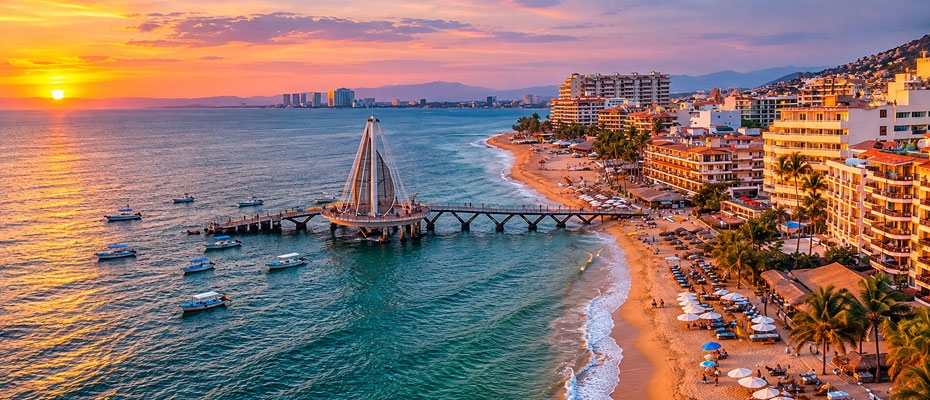
Six Mexican beaches rank among the Americas’ best in 2026
Tulum takes second place in the Condé Nast Traveller Readers’ Choice Awards, while destinations in Baja California Sur, Jalisco and Nayarit also receive recognition
 Read the News
Phuket Vegetarian Festival brings Hokkien traditions to the streets
The nine-day celebration from 10 to 18 October combines shrine ceremonies, processions and centuries-old rituals across Phuket City
 Read the News
RIU repositions Riu Touareg as family resort after major renovation
The 1,181-room resort on Boa Vista has reopened with redesigned accommodation, expanded dining and a new focus on families
 Read the News
Thailand plans tourism experiences for transit passengers
New partnership between tourism and aviation organisations aims to turn longer flight connections into short visits to local attractions, restaurants and communities
 Read the News
Spain welcomes 12.3 million international tourists in August
International visitor spending exceeded €17.8 billion during the month, while arrivals rose 9.2% and destinations outside Spain’s main tourism regions recorded particularly strong expenditure growth
 Read the News
Tempo by Hilton to make German debut at Munich Airport Arena
The 199-room lifestyle hotel is scheduled to open in 2029 as part of the new MUNICH ARENA entertainment campus near Munich Airport
 Read the News
Hyatt Centric Sapporo opens as new base for exploring Hokkaido
The 216-room property is the Hyatt Centric brand’s first hotel in Hokkaido, combining a central Sapporo location with a strong focus on regional design and cuisine