Tourexpi

Ryanair to suspend all Bremen flights from April 2027
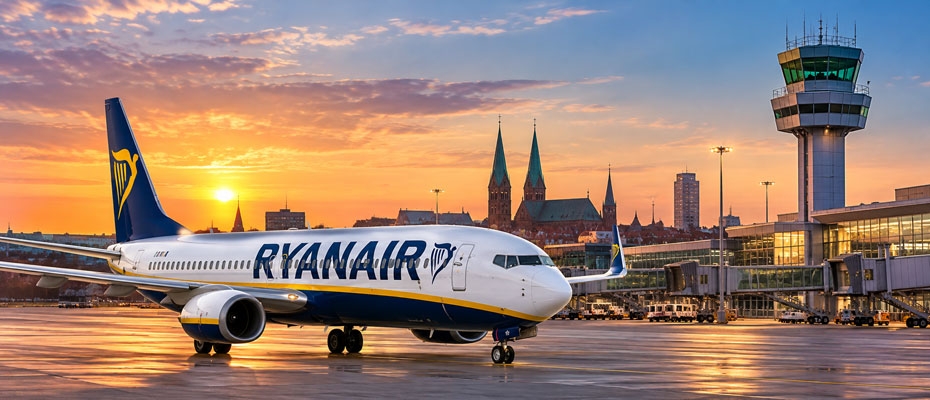
Ryanair has announced that it will discontinue all flights to and from Bremen Airport from April 2027, removing approximately 500,000 seats annually from the northern German city's air transport network. The decision, announced on 8 October 2026, marks a significant reduction in regional connectivity and represents another step in the airline's restructuring of its German operations.
The Irish low-cost carrier attributes the withdrawal to a combination of airport charges, air traffic control fees, security costs and Germany's aviation tax. According to Ryanair, these expenses have made Bremen less competitive than airports elsewhere in Europe that offer lower operating costs. The airline intends to redistribute the affected capacity to markets where it considers conditions more favourable for expansion.
The decision could have consequences beyond the airport itself. The loss of Ryanair's services will reduce the range of direct connections available to passengers in Bremen and the surrounding region, while potentially affecting inbound tourism and businesses dependent on air connectivity. The announcement also intensifies the wider debate over the competitiveness of Germany's aviation market, where airlines have repeatedly raised concerns about taxes and operating expenses.
Bremen loses half a million seats
Ryanair says the withdrawal will eliminate its entire annual capacity of approximately 500,000 seats at Bremen Airport. The airline has not specified in its announcement which individual routes will be discontinued, but confirmed that all operations at the airport will cease from April 2027.
The carrier argues that Bremen has become commercially unattractive compared with alternative European airports. It maintains that destinations offering lower airport charges and more favourable tax conditions are better positioned to secure additional aircraft, routes and investment.
Jason McGuinness, Ryanair's Chief Commercial Officer, described the withdrawal as a consequence of the airport's cost structure and Germany's wider aviation charges.
"We regret having to announce the closure of all Ryanair flights to and from Bremen Airport from April 2027," McGuinness said, according to the company's statement.
The airline expects the withdrawn capacity to be reassigned to other European markets rather than retained elsewhere in Germany. This could benefit airports competing for additional low-cost airline services, particularly those offering more attractive operating conditions.
For Bremen, the withdrawal means losing an established airline partner and a substantial volume of available seats. The eventual impact on passenger numbers will depend partly on whether other carriers introduce replacement services or expand existing operations.
Ryanair renews pressure over German aviation costs
The Bremen announcement forms part of Ryanair's broader criticism of Germany's aviation taxation and airport charging system. The airline argues that high access costs have constrained the recovery and expansion of air services in Europe's largest economy.
Ryanair is calling on the German government to abolish the aviation tax and reduce air traffic control, security and airport charges. It maintains that these measures would encourage airlines to allocate additional capacity to German airports.
The carrier has linked its demands to a conditional expansion proposal. If operating costs are reduced, Ryanair says it would be prepared to more than double its annual passenger traffic in Germany to 34 million, base 30 aircraft in the country, establish new operating bases and create thousands of jobs.
These figures represent the airline's stated growth ambitions rather than confirmed investment commitments. Their implementation would depend on changes to the cost environment and subsequent commercial decisions.
McGuinness reiterated that Ryanair has aircraft available for expansion but intends to allocate them to airports and countries offering competitive conditions.
The company has also urged Federal Transport Minister Steffen Bilger to address what it describes as Germany's deteriorating position in the European aviation market. Ryanair argues that without reforms, additional German airports could face reductions in routes, passenger capacity and airline investment.
The airline's position reflects a broader commercial challenge for airports seeking to attract price-sensitive carriers. Airport operators must balance the costs of infrastructure, security and operations against the financial conditions airlines demand when deciding where to deploy aircraft.
For Bremen, the immediate consequence is the scheduled departure of Ryanair in spring 2027. The announcement leaves the airport facing the task of replacing lost capacity while highlighting the growing importance of operating costs in airlines' decisions about their European networks.
Image Credit: © AI generated illustration
The most interesting news
 Read the News

Lufthansa Group expands Japan network to 50 weekly flights
Lufthansa will return to Nagoya and add daily Frankfurt–Tokyo Narita services as the group significantly increases Japan capacity for Summer 2027
 Read the News
Silversea adds 103 voyages for 2028-2029 season
The new collection spans 56 countries and introduces culinary sailings, 29 new ports and a 75-night circumnavigation of South America
 Read the News
Global cruise market forecast to nearly double by 2034
Passenger growth, fleet expansion and rising demand for premium and experiential travel are expected to drive the market to $38.5 billion
 Read the News
Hotel Indigo reaches 200 hotels as global expansion accelerates
IHG’s Luxury & Lifestyle brand has doubled its footprint since 2019 and has another 134 properties in the development pipeline
 Read the News
Emirates launches first daily Dubai-Helsinki service
The new year-round route gives Finland its only direct connection to the UAE and opens new one-stop links to Asia, Africa, the Indian Ocean and Australasia
 Read the News
Holland America Line to add Arcadia as 12th ship in 2029
The Vista Class vessel will transfer from P&O Cruises, adding capacity for more than 2,000 guests and supporting Holland America’s fleet modernization program
 Read the News
WTTC and ICC join forces to strengthen tourism SMEs worldwide
New partnership targets regulatory, financial, digital and mobility barriers affecting small and medium-sized businesses across global Travel & Tourism
 Read the News
Costa Rica launches interactive map of natural and cultural heritage
Free bilingual platform combines tourism, biodiversity, marine science, history and geography in a digital exploration tool
 Read the News
SpongeBob musical to debut at sea on Royal Caribbean’s Hero
Broadway-inspired production will headline the entertainment programme when the new Icon Class ship begins Caribbean cruises from Miami in August 2027
 Read the News

Phuket Vegetarian Festival brings Hokkien traditions to the streets
The nine-day celebration from 10 to 18 October combines shrine ceremonies, processions and centuries-old rituals across Phuket City
 Read the News
RIU repositions Riu Touareg as family resort after major renovation
The 1,181-room resort on Boa Vista has reopened with redesigned accommodation, expanded dining and a new focus on families
 Read the News
Southeast Asian travellers look beyond China’s traditional gateways
Traveloka data shows bookings to China’s emerging city destinations growing more than twice as fast as demand for Beijing, Shanghai, Guangzhou and Shenzhen
 Read the News

Tempo by Hilton to make German debut at Munich Airport Arena
The 199-room lifestyle hotel is scheduled to open in 2029 as part of the new MUNICH ARENA entertainment campus near Munich Airport
 Read the News
Spain welcomes 12.3 million international tourists in August
International visitor spending exceeded €17.8 billion during the month, while arrivals rose 9.2% and destinations outside Spain’s main tourism regions recorded particularly strong expenditure growth
 Read the News
Thailand plans tourism experiences for transit passengers
New partnership between tourism and aviation organisations aims to turn longer flight connections into short visits to local attractions, restaurants and communities
 Read the News
Hyatt Centric Sapporo opens as new base for exploring Hokkaido
The 216-room property is the Hyatt Centric brand’s first hotel in Hokkaido, combining a central Sapporo location with a strong focus on regional design and cuisine
 Read the News
European travel and tourism growth to reach 3.1% in 2026
WTTC forecasts stronger growth than the wider economy as more than 1,000 industry leaders gather in Malta for the organisation’s Global Summit
 Read the News
Lufthansa named Best European Airline at Asian travel awards
Travel industry professionals across Asia recognise Lufthansa as the airline prepares to introduce its new Allegris cabins on flights to Singapore and Kuala Lumpur
 Read the News
Oktoberfest draws growing interest from Asian travellers
Agoda data shows strong search growth from China, India and Japan, while visitors increasingly combine Munich with other German destinations
 Read the News
Atlas Ocean Voyages expands Antarctica programme for 2028/29
The cruise line introduces 25 polar expeditions, more fly-and-sail departures and extended itineraries reaching South Georgia, the Falkland Islands and the Antarctic Circle
 Read the News
TransNusa increases Jakarta–Singapore flights to four daily
Indonesian carrier expands capacity on the busy regional route, offering additional evening connections for business and leisure travellers