Tourexpi

German inbound tourism remains on growth path despite geopolitical uncertainties

Germany continues to demonstrate its appeal as an
international travel destination despite ongoing geopolitical tensions and
economic uncertainties in key source markets. According to the German National
Tourist Board (GNTB), preliminary figures from the Federal Statistical Office
show that overnight stays by international visitors increased by 0.6 per cent
in April 2026 compared with the same month last year.
The positive development comes at a time when global
tourism is facing challenges linked to the war in the Middle East and
disruptions to international air traffic. While domestic tourism in Germany
recorded a decline in April, international demand remained resilient.
Positive outlook for the summer season
Recent market research and industry forecasts indicate
favourable conditions for inbound tourism during the upcoming summer months. A
survey conducted by the European Travel Commission following the outbreak of
the Iran conflict recorded an eight per cent increase in consumers’ intentions
to travel within Europe.
Additional research commissioned by the GNTB
highlights growing interest in Germany among travellers from neighbouring
markets, particularly the Netherlands and Belgium, which remain among the
country's most important source markets.
The latest GNTB Travel Industry Expert Panel also
points to continued confidence among international travel professionals. More
than half of participating tour operators expect their Germany business to grow
over the next six months, while a further 41 per cent anticipate stable booking
volumes.
Safety and proximity influence travel decisions
“The outbreak of the war in the Middle East and the
associated disruptions to global air traffic have clearly demonstrated both the
fragility and the high resilience of our global system,” said Petra Hedorfer,
Chief Executive Officer of the German National Tourist Board.
“Our Expert Panel shows that people want to travel,
but they are booking with a stronger focus on safety, at shorter notice and
with a greater preference for nearby destinations.”
According to Hedorfer, Germany is well positioned to
benefit from these changing travel patterns thanks to its reputation as a safe
and service-oriented destination in the heart of Europe, combined with strong
value for money and a diverse tourism offering.
Forecasts point to further growth
The latest projections from Tourism Economics support
this positive outlook. Under its baseline scenario for 2026, the consultancy
forecasts growth of 1.9 per cent in arrivals from European source markets and
4.5 per cent from overseas markets.
These expectations underline the continued resilience
of Germany’s inbound tourism sector and suggest that international demand is
likely to remain robust despite a volatile global environment.
For the German tourism industry, the figures provide
encouraging signs that travellers continue to prioritise reliable, accessible
and high-quality destinations when planning their holidays and short breaks.
Image Credit: © Tourexpi
The most interesting news
 Read the News

Qatar Airways expands winter network to more than 170 destinations
Canberra and Zanzibar return to the network as the airline adds frequencies across Europe, Africa, Asia Pacific, North America and the Middle East
 Read the News

Istanbul Airport targets luxury aviation with new private terminal
Around 3,600 VVIP passengers have used the JETEX-IGA facility since May, with particularly strong demand from Russia, Central Asia and the Middle East
 Read the News
Nicaragua strengthens tourism promotion in Canada
The Nicaraguan Tourism Institute presented the destination to travel industry professionals in Toronto and Montreal as part of the Canada Roadshow 2026
 Read the News
Türkiye ranks among top non-EU destinations for European travellers
Eurostat data shows Türkiye was one of the three most popular destinations outside the European Union for EU residents in 2024
 Read the News
Hilton ranks as Asia’s best workplace for second consecutive year
The hotel group marks a decade as the region’s highest-ranked hospitality employer while its Asia-Pacific workforce grows to more than 99,000
 Read the News
ALTA aviation conference focuses on regulation and competitiveness
More than 170 airline executives, lawyers and industry experts discussed legal and aeropolitical challenges facing aviation across Latin America and the Caribbean
 Read the News
Emirates signs 11 partnerships at Arabian Travel Market in Dubai
New agreements span tourism promotion, airline cooperation, travel distribution and specialised customer segments across Europe, Asia and the Middle East
 Read the News
Peru releases previously blocked Machu Picchu booking capacity
Unconfirmed and unpaid reservations had reduced actual availability, with the affected spaces returning to the official booking system from 16 September
 Read the News
LATAM invests $25 million in satellite Wi-Fi for 60 new aircraft
Airbus A320neo and A321XLR aircraft as well as Embraer E195-E2 jets will receive multi-orbit satellite connectivity as LATAM expands its connected fleet
 Read the News

Germany: Condor adds American Airlines as new North American partner
New interline agreement opens additional connections across the US and Canada with single-ticket journeys and through-checked baggage
 Read the News
Germany’s inbound tourism gains momentum during summer season
International overnight stays rose 3.2 percent in July, while travel industry sentiment points to further growth in the months ahead
 Read the News
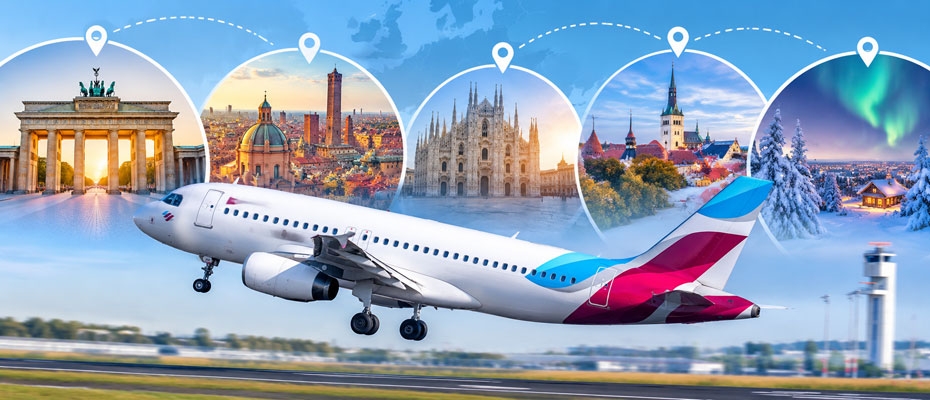
Eurowings expands winter network from Germany and the Czech Republic
New routes and extended services connect Berlin with Bologna, Dusseldorf with Milan and Tallinn, and Prague with Finnish Lapland
 Read the News
Türkiye: Civil aviation fleet expands to 2,300 aircraft including balloons
Airlines, air taxi operators and general aviation all increased their fleets in the first half of 2026, while hot air balloons continued to play a significant role in tourism
 Read the News

Thailand: Bangkok Art Biennale turns the capital into a citywide art route
The fifth edition runs from 29 October 2026 to 28 February 2027, bringing contemporary art to temples, museums, landmarks and public spaces across Bangkok
 Read the News
Agoda matches Asian hidden gems with the twelve zodiac signs
From Niseko’s ski slopes to Ninh Binh’s limestone landscapes, Agoda turns astrology into inspiration for exploring lesser-known destinations across Asia
 Read the News
Oceania Cruises opens 12 segments of 2028 world voyage for booking
The inaugural 180-day voyage of Oceania Aurelia can now be booked in shorter sections of 10 to 19 days, covering destinations across six continents
 Read the News
Peninsula Hotels earn three places in The 50 Best Hotels 2026
Properties in Istanbul and Hong Kong enter the global Top 50, while The Peninsula Shanghai debuts at No. 99
 Read the News
Thailand: TAT promotes wellness and MICE tourism at Gastech 2026
Thailand is using the global energy conference in Bangkok to showcase wellness, culture and responsible travel to more than 50,000 international professionals
 Read the News
Silversea introduces four suite categories across its fleet
Seventeen suite types are reorganised into Oceanview, Veranda, Residence and Villa, with additional benefits for higher categories from January 2027
 Read the News
Malta: WTTC adds José María Aznar and Nick Adams to Global Summit
More than 1,000 delegates from over 100 countries are expected in Valletta for the WTTC Global Summit from 7 to 9 October 2026
 Read the News
Thailand: Pattaya Bikini Beach Race celebrates 10th anniversary
The Pattaya International Bikini Beach Race returns on 31 October with a 5K night run combining beach sports, entertainment and Halloween celebrations